
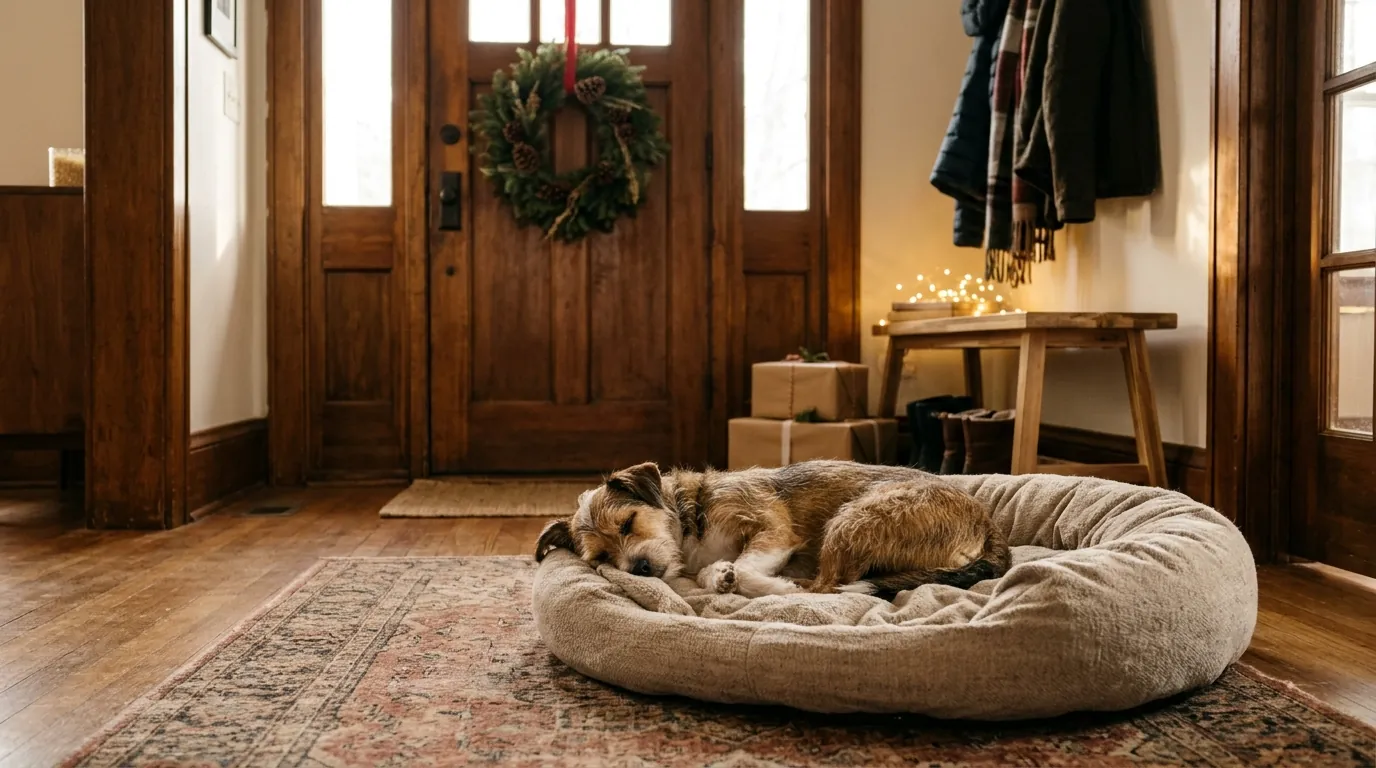
The holidays mean more guests, more deliveries, and more of that one sound that turns a sweet, sleepy dog into a full-volume security guard: the doorbell. If you’re dealing with a dog barking at the doorbell every time someone knocks, you are in very good company.
Let’s talk about why it happens and what you can actually do about it, starting this week.
What Does Your Dog Think the Doorbell Means?
When that chime echoes through the hallway, your dog isn’t trying to give you a headache. They’re having a big feeling and doing their best to express it. Here’s a quick translation, straight from the couch:
- “INTRUDER! Everyone stay calm! I will NOT be staying calm!”
- “Is it the pizza? It’s always the pizza.”
- “Strangers are touching MY people.”
- “I barked and the delivery person left. I am a hero.”
That last one is the real secret. Think about a typical package drop-off: a stranger walks up, rings the bell, sets down a box, and walks away. Meanwhile, your dog sprints to the door and barks with everything they have.
Two seconds later, the stranger is gone. From your dog’s point of view, barking made the intruder leave. Because that happens nearly every time, a dog barking at the doorbell gets rewarded again and again without anyone meaning to.
Why Is My Dog Barking at the Doorbell?
The doorbell itself isn’t the problem. It’s what the doorbell predicts. Over time, that little chime becomes a signal for strangers, excitement, chaos, and sometimes worry. By the time you reach the doorknob, your dog’s energy is already at a ten.
The good news for every guardian: because this reaction is learned, we can teach the doorbell a brand new meaning. At Pawsitive Manners, we use force-free, positive reinforcement training that helps dogs feel safe and gives them more choice in their world. That approach is backed by the American Veterinary Society of Animal Behavior, which recommends reward-based methods for all dog training and behavior change.
Your 5-Step Plan for a Calmer Front Door
You don’t need to fix the whole holiday season in one afternoon. These five steps can gently turn a dog barking at the doorbell into a dog who heads for their mat.
1. Change What the Doorbell Means
Start when nobody is at the door and your dog is relaxed. Play a recording of your doorbell at a very low volume, and right after the chime, hand your dog a delicious treat.
Repeat a few times, then take a break. Over days or weeks, slowly raise the volume as long as your dog stays loose and happy. You’re teaching them that the doorbell means “snacks happen,” not “panic happens.”
2. Give Them a Job
It’s hard to bark at the door while lying happily on a mat. Teach “go to your mat” when nothing exciting is happening, and reward generously until your dog loves hanging out there.
Once that’s easy, start pairing it with the quiet doorbell recording. For more ideas like this, check out our Easy and Effective Dog Training Tips.

3. Set Up Before Guests Arrive
Management isn’t cheating, it’s smart! A sturdy baby gate, a leash, or a cozy room with white noise and a stuffed food toy can keep everyone comfortable while your dog is still learning. Set this up before the doorbell rings, not in the middle of the excitement.
4. Coach Your Guests
Let’s be honest, our human relatives sometimes need more training than our dogs. Ask visitors to text when they arrive and to skip the big hello for the first few minutes. No eye contact, no reaching, no “Who’s a good puppy?!”
Instead, have guests gently toss a treat on the floor away from themselves, and let your dog choose when they’re ready to say hi.
5. Always Offer an Exit
Some dogs simply don’t love a crowd, and that’s okay. Make sure your dog has a quiet retreat where no one bothers them.
Watch for signs they need a break: lip licking, yawning when they aren’t tired, turning their head away, or showing the whites of their eyes. If you see these, kindly guide them to their quiet spot with a chew.
Quick Tip: The 5-Minute Doorbell Game
This little game is one of the easiest ways to start helping a dog barking at the doorbell, and it fits into the busiest holiday schedule.
- Grab 10 small, high-value treats.
- Play the doorbell sound at a low volume.
- Treat immediately, every time. If your dog woofs, that’s okay. Just lower the volume next time.
- Stop while your dog is still having fun.
Do this once or twice a day, and you’ll often start to see your dog look at you when the doorbell rings instead of at the door. That’s a big win!
Myth vs. Fact
Myth: “Just let them bark it out. They’ll get used to it.”
Fact: For many dogs, repeated exposure to something stressful makes the reaction bigger, not smaller. Small, positive steps help your dog build real confidence and feel safe in their own home.
Bonus: Holiday Doorbell Drama Bingo
Let’s have a little fun with the chaos of the season. How many of these can your dog check off this year?
- Barked at a doorbell on TV
- Greeted a guest while holding a shoe
- Escorted Grandma all the way to the bathroom
- Barked at the neighbor’s giant inflatable reindeer
- Skipped the party and napped in the coat pile
Share your dog’s score in the comments below, or tag us on Instagram at @pawsitive_manners_dogtraining. We promise to laugh with you!
Frequently Asked Questions
How long does it take to stop a dog barking at the doorbell?
Every dog is different. Many dogs show progress within a few weeks of short, regular practice, while dogs with stronger worry about visitors may need more time. Going at your dog’s pace is what makes the change last.
Should I tell my dog “no” when they bark at the door?
Scolding usually adds more stress to an already stressful moment, and sometimes it even sounds like you’re barking along! It works better to teach your dog what you’d like them to do instead, like going to their mat, and to make the doorbell predict good things.
What if my dog is scared of guests, not just excited?
Give them space and plenty of choice. Use a quiet retreat room during visits, ask guests not to approach, and reach out to a certified behavior consultant for a plan tailored to your dog.
Need a Little Help?
If a dog barking at the doorbell has made your front door the most stressful spot in the house, you don’t have to figure it out alone. I’d love to help you and your dog find a calmer routine before the holidays are in full swing. Reach out anytime at PawsitiveManners.com or give me a call at 650.353.0588, and we’ll make a plan together.
Wishing you a cozy, happy, (mostly) quiet holiday season!