First, I want to share something that’s been sitting with me for a while now.
There’s a woman in my neighborhood who walks her young chocolate Labrador on a prong collar. Every time I see them, I steer my dog as far away as I possibly can, across the street, around the block, behind a parked car, whatever it takes.
Because if we get too close, and her dog shows even a flicker of excitement or worry, she yanks the leash upward. Hard. Sometimes hard enough that his front legs come off the ground as she muscles him past us.
She does this every time they see another dog. Every single time.
It’s truly disturbing to watch. And here’s the question: Why is this happening?
There’s so much misinformation out there, especially on social media, and so much bad advice dressed up as confident expertise, that it’s easy for a well-meaning dog guardian to get badly misled and end up unintentionally hurting the dog they love.
She probably thinks she’s training him, or that she’s correcting a problem. She has no idea that what she’s actually teaching him is that other dogs make pain happen.
I think about that lab a lot. And I think about how many of us are, in smaller and quieter ways, asking far too much of our dogs without realizing we’re doing it.
We ask a lot of our dogs
Like, a lot. And most of the time, we don’t even notice we’re doing it.
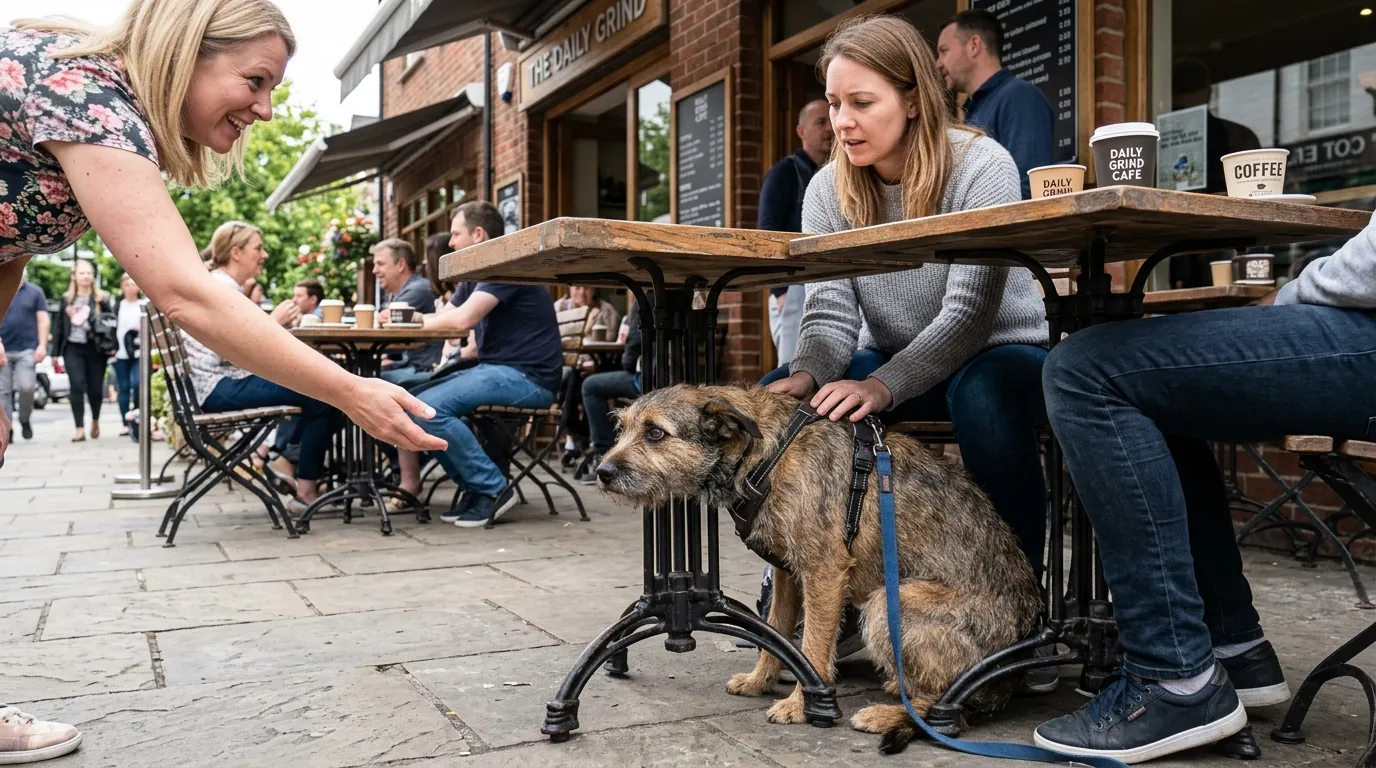
Think about an average week. The morning walk, where they’re expected to ignore squirrels, joggers, kids on scooters, garbage trucks, and the neighbor who insists on baby-talking them. The coffee shop, where they lie under the table while strangers reach for their head without asking. The friend who lets her toddler climb on the dog because “he’s so good with kids.”
Then add the dog park, daycare, the vet, the family gathering, the Saturday hike, the brewery patio, and the home improvement store. And in between all of that, they’re expected to be calm, friendly, polite, and quietly grateful.
The wild thing is, they mostly do it. They wag, they tolerate, they cope. Which is exactly why we keep asking.
We mistake their compliance for contentment, and we keep adding to the list.
I want to make a case for asking less.
The dog we have, not the dog we pictured
The dog in front of us is a specific dog. Not a generic dog. Not the Instagram dog. Not the dog in our head when we decided to get a dog.
This dog. With this nervous system, this history, these preferences.
- Some dogs love the dog park. Some find it genuinely awful.
- Some dogs are thrilled when guests come over. Some would rather hide in the bedroom until everyone leaves.
- Some dogs adore strangers. Some would prefer that strangers pretend they don’t exist.
None of these dogs are broken. They’re just dogs, having opinions.
The trouble starts when we decide our dog should be the friendly, social, up-for-anything dog, regardless of who they actually are. And then we keep dragging them into situations that confirm, over and over, that they are not that dog.
We tell ourselves we’re “socializing” them, or “helping them get over it.” But often what we’re really doing is teaching them three painful lessons:
- We won’t protect them.
- Their signals don’t matter.
- The world is a place where their preferences get overridden.
This is, in a more painful form, what’s happening to the chocolate lab. His normal, dog-like response to seeing another dog, interest, a little overstimulation, maybe some uncertainty, has been answered with sharp pain around his neck.
Now he has two problems. The original one, which was just learning how to be a dog in public. And the new one we made for him: he now associates other dogs with pain. That second problem will get worse, not better, the more it’s “trained.”
A different way of working with dogs
This is the part of my job I love the most: showing people there’s a whole different way.
Positive reinforcement and science-based training don’t try to mold the dog into what we perceive as a perfect dog.
We start by seeing the dog, truly looking at the dog in front of us, understanding who they are, what they find difficult, what they find rewarding, what their nervous system is telling us about what they can handle today.
From there, the work is about offering the least intrusive, most gentle, most effective solutions we can. solutions that protect the dog’s emotional well-being and work for the guardian’s real-life wishes.
A dog who feels safe and understood is a dog who can learn. A dog who can learn is a dog who can live the kind of life their guardian was hoping for when they brought them home.
That’s the whole game. Not control. Not dominance. Not “showing them who’s boss.” Just:
- See the dog.
- Understand the dog.
- Meet them where they are.
- Build forward from there.
Effective. Humane. Built on trust instead of fear. And it works beautifully and lastingly for problems that prong collars, shock collars, and leash-popping have been failing at for decades.
Stress isn’t a personality flaw
Stress isn’t just a feeling. It’s a physical state, and it does real things to a dog’s brain and body.
When a dog is genuinely over-threshold, they aren’t capable of learning the way we usually expect. The parts of the brain that handle memory and decision-making get crowded out by the parts that handle survival.
- The dog who “won’t listen” at the busy farmers market isn’t being stubborn. They’re flooded.
- The dog who keeps lunging at skateboards isn’t being defiant. Their nervous system has decided skateboards are a threat.
No amount of leash correction is going to teach calculus to someone who’s drowning.
When stress goes from occasional to chronic, things shift more permanently.
A dog living in a constant low-grade state of overwhelm gets worse at recovering from scary things, worse at telling safe situations from dangerous ones. Their world shrinks.
This is why “she’ll get over it” is such a dangerous philosophy. Sometimes they do. Often, what looks like “getting over it” is a dog learning they have no say in what happens to them, and going quiet about it.
The practical upshot: if your dog is struggling with leash reactivity, separation worries, snappiness, or refusal to settle, the first question isn’t “how do I train this away?” It’s “what’s the overall stress load of this dog’s life, and where can we lower it?”
Tolerance is not the same as enjoyment
This one is everywhere.
- A dog who lies still while a kid pulls their tail is not necessarily a “good dog with kids.”
- A dog who freezes while a stranger hugs them is not giving consent.
- A dog who endures the loud holiday party from their bed in the corner is not having fun.
They’ve just figured out that protesting doesn’t work, and they’ve gone still.
We see the stillness and read it as comfort. It’s often the opposite. It’s a dog who has run out of options.
The signals are usually there if we look for them:
- Head turning away
- Mouth going from soft to tightly closed
- Sudden lip-licking with no food in sight
- Subtly stiff body, ears back
- Trying to put distance between themselves and what’s happening
None of these are dramatic. That’s part of why we miss them. Dogs are masters of polite, low-key communication, and most of us have been trained to ignore everything short of a growl.
When we do notice and respond, when we say “actually, she doesn’t want to be petted right now,” or we move our dog away, or we just let them leave, something important happens.
The dog learns that we’re paying attention. That their signals work. That they don’t have to escalate to be heard.
This is the foundation of pretty much every good thing in a dog-human relationship.
The fully booked dog
Let me push back on a piece of conventional wisdom: that a tired dog is a happy dog, and therefore, more activity is always better.
A lot of modern dogs live extraordinarily busy lives. Daycare. Long walks. Training classes. Weekend hikes. Frequent outings. A constantly active household.
Even the good parts add up to a nervous system that rarely gets to fully come down.
Dogs need more rest than most of us give them credit for:
- Adult dogs can comfortably sleep 12–14 hours a day
- Puppies and seniors need more
- They also need boring time. Stretches where nothing in particular is happening
The choice part matters. A dog who gets to pick their own low-stakes activity, like chewing, sniffing the yard, watching the window, or napping, is doing something subtly different from a dog being walked, trained, or socialized.
If your dog is wired but tired, cranky, or struggling to settle, one of the most underrated interventions is to do less for a couple of weeks. Fewer outings, sniff walks instead of brisk walks, more downtime.
A lot of dogs perk up dramatically when their schedule loosens.
Listen to the body
Before you assume any behavior change is “behavioral,” think about pain.
Pain is one of the most chronically under-recognized causes of so-called bad behavior in dogs:
- A dog who used to love being handled and now snaps when you touch their hindquarters
- A dog who suddenly doesn’t want to jump in the car
- A dog who’s gotten reactive on leash for no obvious reason
- A dog who’s snappy with a housemate they used to get along with
These are very often dogs whose joints, gut, teeth, ears, neck, or back hurt, and who have no other way to tell us.
If something changes, get a thorough vet workup before you start a training plan. It’s wild how often the “training problem” turns out to be a hip problem, a thyroid problem, or a tooth problem, and the dog comes back to themselves once it’s treated.
What asking less actually looks like
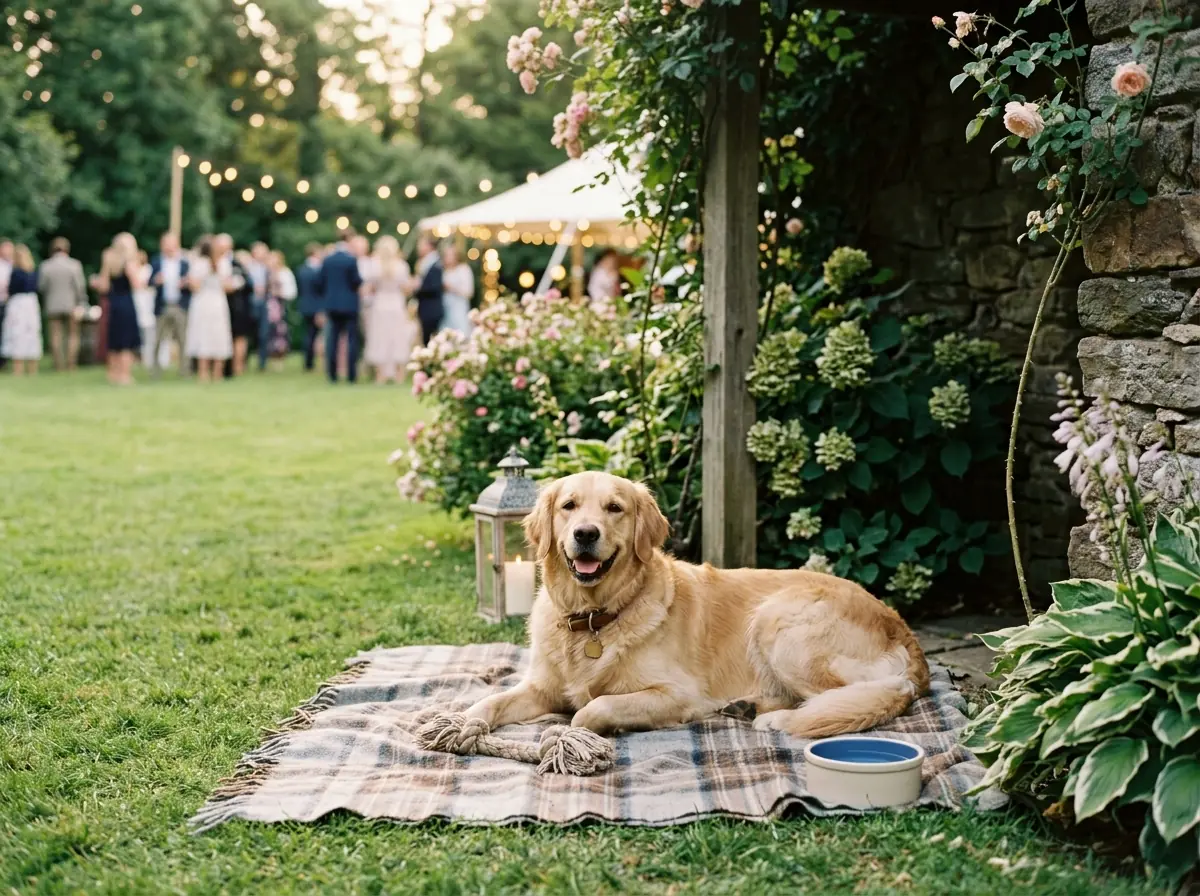
This isn’t about coddling a fragile dog who never has to do anything hard. Dogs need real lives. Real things to do, places to go, expectations they can rise to.
The shift is about being honest, in any given moment, about what we’re actually asking, and whether it’s a fair ask.
In practice, asking less looks like:
Letting your dog leave. The party is too much, the playdate isn’t going well, and the kid at the park is being grabby. You trust your dog’s discomfort, and you go.
Running interference. The stranger reaches for your dog’s head, and you cheerfully say, “She’s actually shy, thanks though,” and you keep walking. Yes, even if they look offended. Our job is to protect our dog, not to meet a stranger’s expectations.
Treating rest as a real category, not a guilty omission. Some days you skip the long walk. Some weekends you skip the planned outing. Sometimes the dog gets to stay home instead of being dragged along.
Checking in with yourself. Am I doing this for the dog, or am I doing this for me and bringing the dog along? Both can be fine, but the answer changes how we set things up and what we need to do for our dog when it gets hard.
Questioning confident advice, even when it comes from voices online. If a method requires hurting your dog to work, it isn’t working. There are better ways. There are always better ways.
Trusting that a dog who’s allowed to say no is also a dog who can wholeheartedly say yes, and that the second one is what most of us were hoping for in the first place.
The relationship is the point
The goal isn’t a perfectly behaved dog. The goal is a relationship, an actual, honest, two-way relationship with another creature who happens to share your house.
Perfectly behaved dogs are often dogs who have learned to disappear inside themselves. That’s not what we want.
We want dogs who feel safe enough to be themselves around us. Who trusts that we’ll listen when they tell us something is too much. Who can therefore relax into the life we’re sharing.
That kind of relationship is built, weirdly, by asking less and noticing more.
Your dog is doing an enormous amount of work just by living in our human world. Elevators, doorbells, leashes, vet visits, strange dogs, strange humans, strange smells, schedules they didn’t choose. They show up for it, mostly with grace, every single day.
The kindest thing we can do in return is keep asking ourselves, before every outing and interaction:
Is this actually a fair thing to ask?
Oftentimes, the answer is yes with a few small adjustments. Sometimes the answer is no, and the kindest move is to skip it.
Either way, the act of asking the question is what changes everything.
We’re all doing our best with the tools we’ve been given. The work is to keep getting better tools and to keep listening to our dogs while we do.
They’ll tell us the rest.